Top Logistics Trends in India You Should Know in 2026
Indian logistics has entered a period of rapid transformation that would have been hard to imagine five years ago. Customer expectations that were once limited to metro cities — fast delivery, real-time tracking, easy returns — have spread to tier-2 and tier-3 towns. The businesses that recognise and adapt to these shifts early will build decisive competitive advantages. Those that ignore them will find their shipping operations becoming a drag on growth rather than a driver of it.
Here are the trends that we believe will define Indian logistics in 2026 and beyond.
1. Real-Time Visibility Has Become Non-Negotiable
There was a time when "Your order has been shipped" was considered adequate communication. Those days are gone. Today's customers expect milestone-by-milestone tracking, estimated delivery windows measured in hours rather than days, and proactive alerts when something goes wrong. On the business side, operations teams need granular shipment visibility to manage exceptions, forecast delivery timelines, and hold courier partners accountable.
This trend is not just technology for technology's sake. Companies with strong tracking infrastructure consistently report lower customer support volumes, faster NDR resolution, and higher customer satisfaction scores. Cargowale's unified tracking layer, which works across multiple courier partners simultaneously, is built around this exact need.
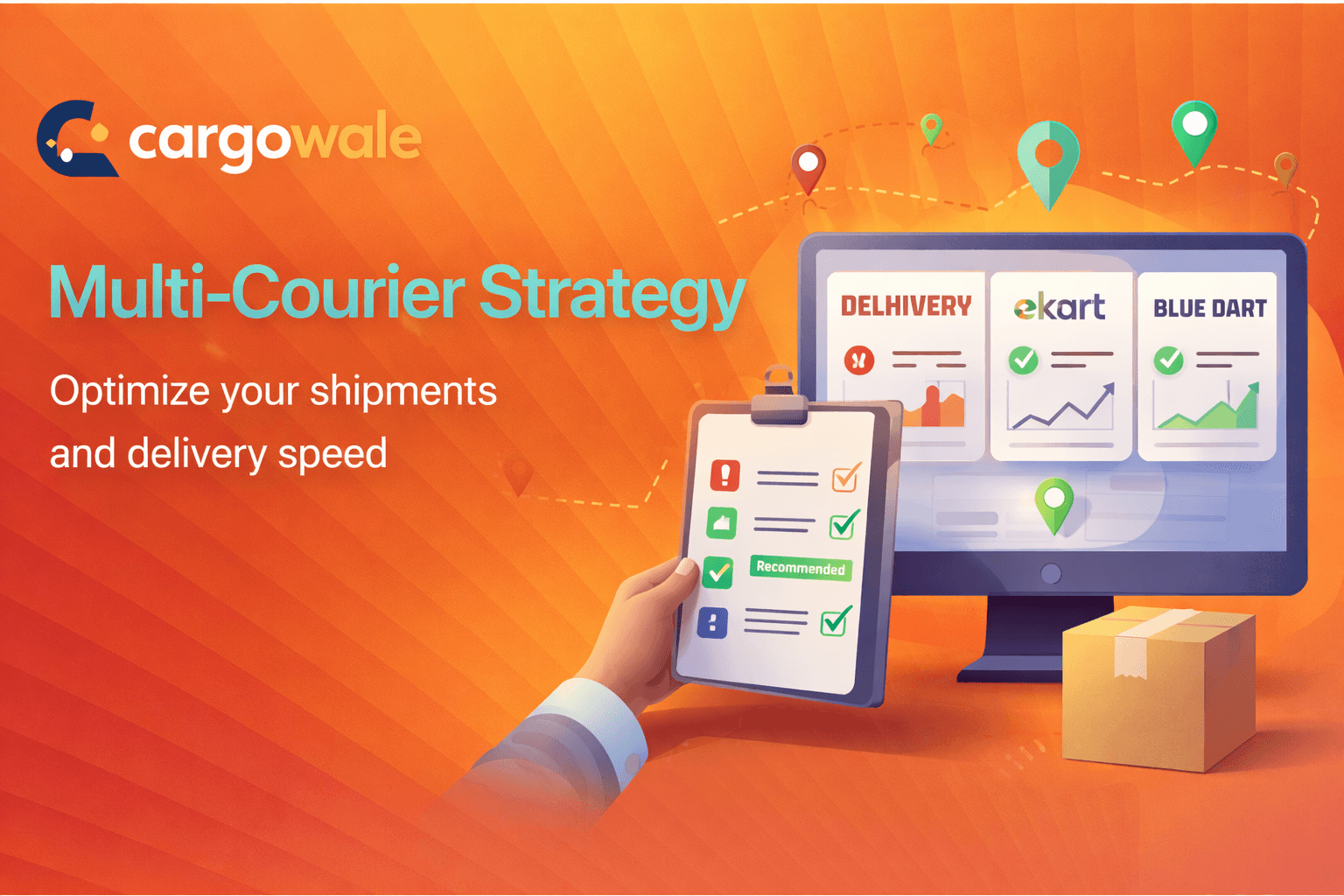
2. Multi-Courier Strategies Are Replacing Single-Partner Dependence
The era of signing an exclusive deal with one courier and shipping everything through them is fading. Progressive sellers are building diversified courier portfolios — using different partners for different zones, service levels, and order types. The logic is simple: no single courier is the best option for every shipment, just as no single mutual fund is the best option for every investment goal.
This shift is being enabled by platforms like Cargowale that aggregate multiple carriers behind a single API, making it practical for businesses to compare and route without managing dozens of separate integrations.
3. Cost Optimisation Is Moving Beyond Rate Negotiation
Historically, reducing logistics costs meant haggling over per-kilogram rates during annual contract renewals. That still matters, but the sharper operators have realised that systemic improvements yield bigger and more durable savings. Rightsizing packaging to reduce volumetric charges. Routing COD-heavy shipments through couriers with the best delivery-success rates to avoid double freight. Automating label generation to eliminate manual errors that cause misroutes. The savings from these process improvements often exceed the savings from rate negotiations.
4. NDR and Reverse Logistics Are Getting Executive Attention
Failed deliveries and returns used to be treated as unfortunate but inevitable. In 2026, they are getting boardroom-level scrutiny because their financial impact is now well understood. A five-percent NDR rate on a thousand daily shipments means fifty failed deliveries every day — each costing the forward freight, the return freight, restocking labour, and potential customer churn. Smart businesses are investing in address validation, pre-dispatch confirmation for COD orders, and structured reattempt workflows to systematically compress these numbers.
5. Demand Is Accelerating Beyond Metro Boundaries
India's next wave of eCommerce growth is not coming from Mumbai, Delhi, or Bangalore — it is coming from Indore, Jaipur, Lucknow, Coimbatore, and thousands of smaller towns where smartphone penetration and digital payment adoption are surging. For logistics providers, this means coverage breadth is becoming as important as speed. Businesses need courier networks that genuinely serve these emerging markets, not networks that technically list the pin codes but deliver inconsistently.
6. Sustainability Is Entering the Logistics Conversation
While still early compared to Western markets, sustainability is beginning to influence logistics decisions in India. Brands are exploring right-sized packaging to reduce material waste, consolidating shipments to lower per-order carbon footprints, and choosing courier partners with electric-vehicle fleets in urban areas. It is not yet a primary purchasing criterion for most Indian consumers, but the trajectory is clear — and businesses that build sustainability into their logistics now will be ahead of the curve when it becomes table stakes.
7. How Cargowale Is Positioned Within These Shifts
Cargowale's platform was designed with many of these trends already in mind. Multi-courier access, real-time tracking across carriers, intelligent rate comparison, COD management, and pan-India coverage are not features we are rushing to add — they are foundational to how the platform works. As these industry trends accelerate, businesses using Cargowale will find themselves naturally aligned with where the market is heading.
Conclusion
The logistics landscape in India is evolving from a cost centre that businesses tolerate into a strategic capability that drives competitive advantage. The trends of 2026 — real-time visibility, multi-courier flexibility, process-led cost control, NDR discipline, and expanding geographic reach — all point in the same direction: logistics is becoming smarter, more data-driven, and more integral to business success than ever before.