Top 7 Courier Partners in India for eCommerce Businesses (2026 Guide)
When you sell online, shipping is not just about moving a box from point A to point B. The courier you choose shapes delivery speed, return rates, customer support volume, and whether a first-time buyer becomes a loyal one. Poor delivery experiences stick in people's minds far longer than a well-packed product, which means courier planning deserves as much attention as product sourcing or marketing spend.
At Cargowale, we have watched businesses of all sizes navigate this decision. The single biggest lesson? There is no universally "best" courier. The right partner depends on where your customers are, what you sell, how heavy your COD mix is, and how fast you need orders delivered. Most successful sellers end up using two or three partners in parallel, routing shipments based on zone strength rather than habit.
1. Why a Thoughtful Courier Mix Beats a Single Partnership
It is tempting to sign one contract and forget about it, but courier networks are not equally strong everywhere. One partner might deliver next-day in Delhi but take five days to reach a tier-3 town in Odisha. Another might handle COD reconciliation beautifully but lack air-freight speed for high-value orders. When you spread shipments across complementary partners, you hedge against delays, reduce return-to-origin costs, and unlock pin codes that a single courier simply cannot serve well.
- Broader reach: Combining networks lets you accept orders from metro cities, smaller towns, and rural pin codes without guessing whether the parcel will actually arrive.
- Lower failed deliveries: Routing each shipment through the partner with the strongest track record on that lane keeps your NDR numbers healthier.
- Competitive transit times: You can match urgency to capability — express partners for same-day promises, economical partners for standard orders.
- Operational safety net: If one courier faces a hub bottleneck during a sale event, your other partners keep orders moving.
2. Seven Courier Networks Indian Sellers Compare Most Often
Delhivery
Delhivery has built one of India's widest private courier networks, and many D2C brands turn to it first because of its tech-driven approach to sorting, routing, and tracking. If your orders span dozens of states and you need a single partner that covers most of them, Delhivery tends to be on the shortlist. Its API integrations are mature, and bulk-shipment workflows are well-documented.
Blue Dart
Blue Dart carries a legacy of premium service in India. Businesses that ship fragile goods, electronics, or time-critical orders often prefer it because on-time performance and careful handling are part of its brand promise. Rates sit above average, so it works best when reliability justifies the premium — think high-value SKUs or next-day delivery guarantees.
Ekart
Originally built to serve Flipkart's internal volumes, Ekart now supports external shippers too. Its strength lies in structured parcel movement and consistent handling, especially for mid-to-high volume sellers who need predictability over flashy features. If you value operational rhythm, Ekart is worth evaluating.
XpressBees
XpressBees has grown rapidly by offering competitive rates alongside decent reach. Many sellers add it to their courier mix as a cost-effective complement to a premium partner. It tends to perform well as a secondary or tertiary option, particularly on standard-delivery lanes.
Ecom Express
Ecom Express was designed specifically for online retail shipments, which means its workflows, technology, and customer communication are oriented around eCommerce needs. If your business is pure-play online and you want a partner that understands the nuances of eCommerce fulfillment from the ground up, Ecom Express is worth a close look.
DTDC
DTDC is one of the oldest private courier names in India, with physical offices in cities and towns that newer players haven't reached. For businesses that need a well-established ground network — especially in southern and western India — DTDC still holds relevance. Its familiarity also means franchise partners and local staff tend to have deep on-ground knowledge.
India Post
India Post reaches corners of the country that no private courier can match. For sellers whose customer base includes rural areas, remote northeastern states, or hill regions, India Post is often the only viable option. Delivery timelines are longer, but the reach is genuinely unparalleled. Treat it as your "last-mile safety net" for pin codes that private couriers flag as unserviceable.
3. Building a Multi-Courier Strategy That Actually Works
Start by mapping your last 90 days of shipments by destination pin code and courier performance. You will almost certainly find pockets where one partner outperforms others. Use that data to build routing rules — for example, route all metro orders through your fastest partner, all COD-heavy zones through the partner with the best delivery rate, and all remote pin codes through India Post or whichever network actually delivers there reliably.
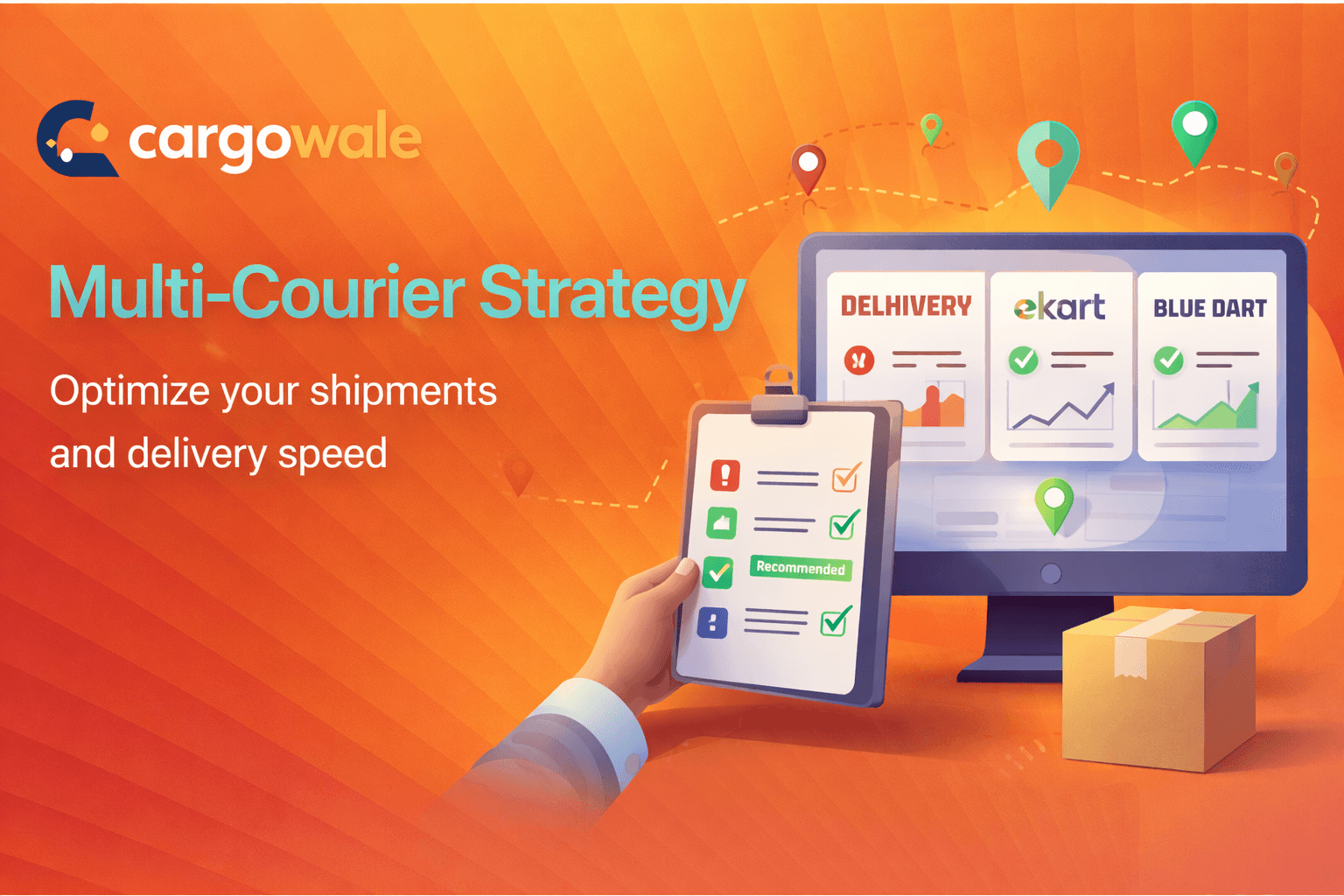
Cargowale's multi-courier infrastructure is designed exactly for this kind of intelligent routing. Instead of manually splitting orders, you can set allocation logic that matches each shipment to the strongest courier lane automatically.
4. Practical Checklist Before Finalizing Any Courier
- Ask for lane-level performance data, not just headline SLAs. A courier that promises 48-hour delivery nationally but averages 72 hours on your busiest route is not a good fit.
- Test COD handling and reconciliation speed if cash-on-delivery orders make up a significant slice of your revenue.
- Check how NDR is communicated — do you get timely alerts, and can you trigger reattempts without chasing support staff?
- Evaluate tracking granularity from the customer's perspective. Clean milestone updates reduce "Where is my order?" calls dramatically.
- Confirm whether the courier can absorb volume spikes during festive sales without degradation.
5. Where Cargowale Fits In
Cargowale is not a courier itself — it is the logistics layer that sits between your business and a network of courier partners. We help you access multiple carriers through a single integration, compare rates in real time, track every package from pickup to delivery, and manage COD remittance without juggling multiple portals. The goal is simple: make your shipping operation feel like a system instead of a daily firefight.
Conclusion
Choosing a courier partner in 2026 is less about finding the "cheapest" option and more about assembling the right combination of networks for your specific order profile. Sellers who invest time in understanding lane-level performance, COD handling, and NDR patterns end up with lower costs, happier customers, and a logistics foundation that actually supports growth instead of limiting it.